Although rigging systems on modern sailing yachts are engineered with highly optimised masts, sail plans and components to meet the expectations of the most demanding users, precise adjustment remains essential to ensure performance, onboard comfort and navigational safety.
Definition of Sailboat Rigging
On a sailing yacht, rigging refers to the complete set of fixed and running systems that enable the vessel to move under sail. These systems consist of various components—such as ropes, halyards, sheets, guys and topping lifts—which together form the operational structure of the sail plan.
More broadly, rigging encompasses all fixed and movable elements that contribute both to propulsion and to the manoeuvrability of the yacht through wind power.
Rigging is composed of:
- Ropes and lines (running rigging: sheets, halyards, control lines)
- Stays and shrouds (standing rigging)
- Blocks, fittings, cleats and clutches mounted on spars (rigging hardware)
All these elements are used to hoist, trim and control the sails.
Two principal categories define a yacht’s rigging system: standing rigging (fixed elements) and running rigging (adjustable elements).
Standing Rigging
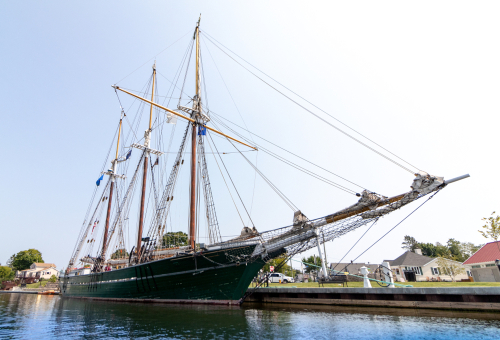
Standing rigging comprises all cables and structural elements that are not adjusted during normal navigation. These include the mast, boom, shrouds, forestays, backstays and, in some cases, spinnaker poles.
Its primary function is to support and stabilise the mast structure, ensuring that it remains correctly aligned and capable of bearing sail loads.
It should be noted that, during initial use, cables may stretch slightly. Although they remain part of the standing rigging, their tension must be rechecked and adjusted to maintain optimal mast support.
Running Rigging
Running rigging consists of all adjustable lines used to control and trim the sails, including halyards, sheets, guys, tack lines and topping lifts. Each line serves a specific function.
Their length and tension are continuously adjusted during navigation to adapt the sail plan to prevailing sea and wind conditions.
Rig Configurations
Depending on the yacht type and its operational programme—cruising, offshore racing or regatta sailing—rig configurations may vary. Two principal configurations are commonly distinguished:
- Fractional rig: the forestay is attached below the masthead, typically at a fraction of the mast height (e.g. 5/6, 7/8 or 9/10), differing from the backstay attachment point
- Masthead rig: both the forestay and backstay are attached at the top of the mast
Rig Tuning and Adjustment
The rigging system—comprising lines, sails, spars and associated mechanical components—forms an interconnected structure dedicated to controlling the yacht. These elements must be precisely adjusted both prior to departure and during navigation.
While certain settings can be established in harbour, optimal tuning must be carried out under load, when the yacht is underway. This requires consideration of meteorological conditions, mast characteristics and sail types (e.g. gaff sails, 3DL sails, fully battened mainsails).
The structural integrity of all components is critical. For instance, spreader brackets—small fittings connecting the spreaders to the mast—play a vital role in maintaining rigidity. Any failure in these elements may lead to dismasting, posing significant safety risks to the crew.
Rig Maintenance
Rigging is subject to progressive wear due to environmental exposure: salt, ultraviolet radiation, wind and prolonged mooring periods.
Common signs of degradation include:
- Corrosion or damage to split pins and rigging terminals
- UV damage to sails (particularly genoas)
- Wear in ropes (discolouration, fraying, abnormal stiffness)
Such deterioration must be monitored carefully. It is the owner’s responsibility to repair or replace any defective components.
While minor replacements—such as shackles, pins or manually swaged terminals—may be carried out onboard, more complex interventions require specialist expertise from a professional rigger.
On high-performance sailing yachts, particularly in racing contexts, a fully optimised rig places the vessel “in the skipper’s hands”. This represents a highly sensitive and technical configuration, requiring the utmost precision and professional expertise.
Una conoscenza approfondita e una gestione rigorosa dell’attrezzatura velica sono fondamentali per garantire una navigazione sicura, efficiente e performante.