Acquiring a sound understanding of basic marine engineering involves comprehending the system—namely the engine—that generates, transmits or transforms motion. It also requires an appreciation of the marine engineer’s role, which is essential for the servicing, maintenance and repair of the propulsion system.
All vessels share the same primary components: the hull structure (hull and deck), the steering system, and the propulsion system. The latter can be categorised into three main types. Small craft may rely on human propulsion—such as canoes, kayaks or pedal boats—using oars, paddles and muscular effort. Sailing yachts, by contrast, utilise wind propulsion, harnessing aerodynamic forces acting on the sails.
Core Components of Marine Propulsion Systems
To move through the water, a motor yacht relies on a marine engine assembly comprising: a gearbox (where fitted), a propeller shaft, a propulsion device (propeller), and a rudder. Together, these elements form the vessel’s propulsion system.
The engine drives the propeller, converting primary energy—derived from fuel—into mechanical and/or electrical energy.
The Gearbox (Reduction Gear)
The gearbox, also referred to as a reduction gear, functions as a transmission system with three operating modes: ahead, astern and neutral. It enables reversal of the propeller’s rotational direction and ensures smooth operation, particularly when electronically or electrically controlled.
This component is indispensable in marine engineering, as it optimises propulsion efficiency and enhances overall performance.
The Propulsion System
The propulsion system is the onboard mechanical arrangement that converts energy into thrust. In motorised vessels, the propeller is driven by the engine; in non-motorised craft, propulsion may be generated by oars powered by human effort.
For a vessel to move effectively, the propulsion system must generate sufficient thrust. Inadequate input—whether mechanical or muscular—results in insufficient forward motion.
Propeller characteristics play a decisive role in engine efficiency and fuel consumption. Key parameters include:
- Number of blades (typically 2 to 7)
- Diameter
- Surface area
- Pitch
- Material (aluminium, stainless steel, cast iron)
The selection of a propeller depends on the rotational speed of the shaft as well as the operational priority between thrust and speed.
Regardless of the type of navigation—leisure, fishing, commercial, military or scientific—the propulsion system must deliver optimal efficiency while maintaining high safety standards. It also ensures effective manoeuvrability, particularly at low speeds or when stationary.
Special Case: Nuclear Propulsion
Nuclear propulsion systems utilise a nuclear reactor to generate steam, which drives a turbine. The turbine’s mechanical energy is then used to rotate the vessel’s propeller shaft, either directly via a reduction gear (turbo-mechanical propulsion) or indirectly through electrical generation (turbo-electric propulsion).
Such systems also produce onboard electricity and fresh water.
Nuclear propulsion offers exceptional autonomy and operational discretion—particularly for submarines—albeit at the cost of high capital investment and the requirement for highly specialised technical expertise.
The Propeller Shaft (Shaft Line)
The propeller shaft is the mechanical link between the engine and the propeller. In maritime engineering, this assembly is referred to as the shaft line, which transmits engine power to the propulsion system.
On large vessels—such as commercial ships, industrial fishing vessels or naval units—diesel engines are substantial in size and are often distributed across the vessel’s length and breadth for safety and redundancy. Each engine is typically connected to a dedicated propeller via its own shaft line. These shaft lines vary in length and inclination, making their installation technically complex.
A notable example is the Harmony of the Seas, equipped with three propellers and three shaft lines, powered by six diesel engines.
The Rudder System
The rudder is a movable device used to control a vessel’s direction while underway.
The submerged portion, known as the rudder blade, generates lateral force, while the rudder stock transmits rotational control. The rudder may be operated manually via a tiller or mechanically through cables or hydraulic rams.
Positioned within the propeller’s slipstream, the rudder is generally more effective when the vessel is moving ahead, which corresponds to standard operating conditions.
Who is responsible for engine performance?
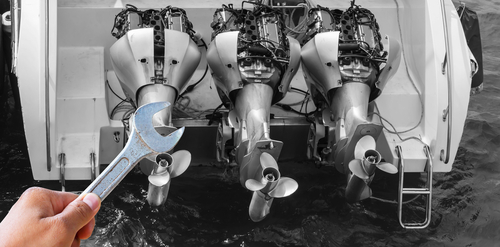
The maintenance and repair of marine engines are carried out by a marine engineer or marine mechanic. Access to this profession typically requires specialised training and recognised qualifications in marine, automotive or industrial mechanics, supplemented by practical experience.
Marine engineers may further enhance their qualifications through certifications such as equipment handling licences and electrical safety authorisations, subject to periodic medical validation.
They are responsible for servicing, maintaining and repairing engines, propulsion systems and associated equipment—such as control systems—in strict compliance with applicable regulations and safety standards. They may also oversee the installation and management of deck equipment used in vessel operations.
Depending on the vessel’s size, the marine engineer may work onboard or ashore. On vessels equipped with an engine room, the engineer is part of the crew and must hold the appropriate maritime certification.
In addition to technical expertise, a marine engineer is often required to manoeuvre vessels and assist in operational handling when necessary.
A solid grasp of these fundamental principles is essential for ensuring safe, efficient and compliant vessel operations, whether in a leisure or professional maritime context.