
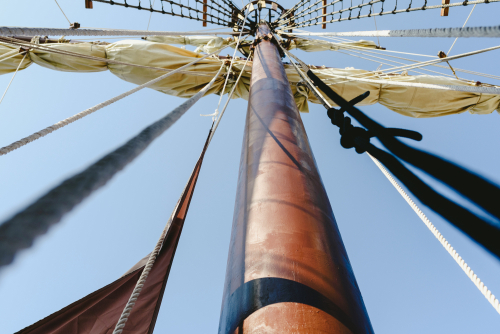
Naval architecture: the art of structures that navigate
Naval architecture may be defined as the discipline concerned with the design of structures intended to operate on and beneath the water. The naval architect is therefore at the origin of all vessel design—from motor yachts and sailing yachts to submarines and offshore platforms.
In modern maritime practice, naval architecture represents a highly effective synthesis of architecture and engineering.
The following glossary focuses exclusively on structural components and construction-related terminology.
A
Abut (scarf jointing): joining two pieces of timber end to end.
Accommodation: internal living arrangements for crew and passengers.
Adze: woodworking tool used to shape curved timbers.
Anchor ring: ring at the end of an anchor used for connection to the chain.
Anchor stock: transverse element at the head of an anchor.
Apron (inner stem): internal reinforcement of the stem.
B
Beam (deck beam): transverse structural beam supporting the deck.
Beam (maximum breadth): widest part of the hull.
Belaying pin: large removable pin used for securing lines.
Bilge bottom: lowest internal part of the hull.
Block (pulley): mechanical device for load transmission.
Bollard / timberhead: vertical structure used for securing mooring lines.
Bowsprit: forward-projecting spar from the bow.
Bulwark: hull extension above deck level.
C
Camber: transverse curvature of the deck.
Carvel planking: planks laid edge to edge.
Caulking: sealing joints between planks.
Chain locker: compartment for storing anchor chain.
Chine: transition between hull bottom and sides.
Clamp (beam shelf): longitudinal support for deck beams.
Clinker planking: overlapping planks.
Coaming: raised edge preventing water ingress.
Counter stern: aft extension of the hull.
D
Deadeye: circular wooden block used to tension rigging.
Deck: structural platform of the vessel.
Depth (hold depth): internal vertical space for cargo.
Draught: depth of the vessel below the waterline.
E
End joint (butt joint): joint between two planks or timbers.
Engineer’s officer (marine): technical manager within a shipping company.
F
False keel: protective element beneath the keel.
False stem: external reinforcement of the stem.
Floor timber: transverse structural element supporting the keel.
Frame: transverse structural সদস্য of the hull.
Freeboard: height of hull above waterline.
G
Garboard strake: first plank adjacent to the keel.
Gusset: reinforcing structural element.
H
Hatch coaming: raised structure around hatch openings.
Hawsehole: opening for anchor chain passage.
Hydrodynamics: study of vessel movement in water.
Hydrostatics: study of vessel stability at rest.
I
Island (aircraft carrier): control superstructure.
J
Jumboisation: ship lengthening process.
K
Keel: principal longitudinal structural element of the hull.
Keelson: internal reinforcement above the keel.
L
Limber hole: opening allowing water drainage in the bilge.
Longitudinal stringer: longitudinal stiffening member.
M
Mast rake: angle of mast relative to the waterline.
Metacentre: stability reference point.
Midship frame: widest transverse frame.
N
Naval engineer: engineer responsible for ship design and maintenance.
O
Offshore platform: structure designed for marine operations.
P
Planking: external hull covering.
Poop deck: raised aft deck.
Port (opening): aperture in hull.
Propeller shaft bracket: support for propeller shaft.
Q
(No standard entries in this glossary)
R
Rabbet: groove for fastening planking.
Rudder stock: vertical shaft of the rudder.
S
Scarf joint: angled joint between timbers.
Scupper: deck drainage opening.
Sheave: grooved wheel in a block.
Shroud: standing rigging supporting the mast.
Sternpost: aft structural member.
Stem: forward structural member.
Stringer: longitudinal reinforcement.
T
Through-hull fitting: opening connecting hull to the sea.
Transom: flat stern surface.
V
Void space / hold: internal storage space.
W
Warping head: rotating drum used for handling lines.